




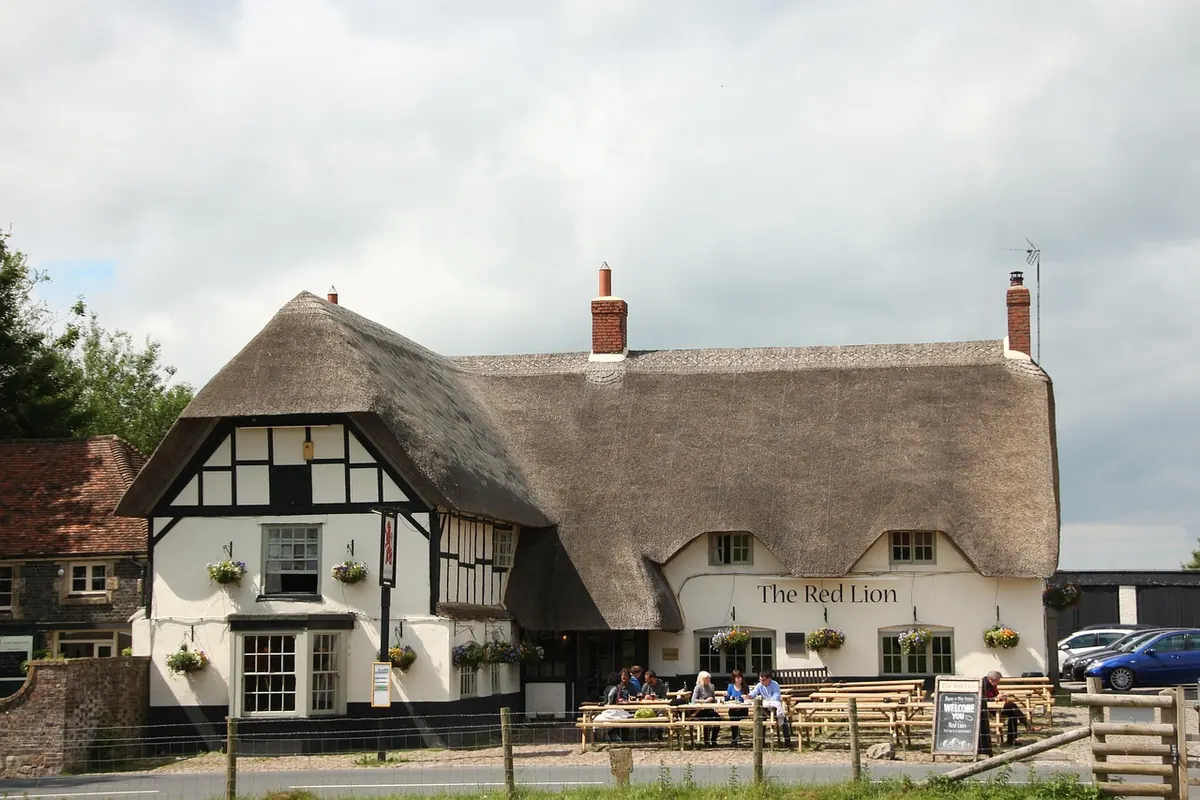
A town is difficult to see from the inside. You know which bench stays dry in a squall, which shopkeeper still writes things down in pencil, which corner smells of chips at half four. None of that helps a reader four counties away unless you make it work. The essays that fail are rarely short on love or on detail; they are short on precision. What follows is a working checklist — questions to ask before, during and after the writing, so that your home town arrives on the page as a place rather than a postcard.
Start with the place, not the feeling
Most drafts open like this: I grew up in a small town where everybody knew everybody. That sentence could open ten thousand essays. It tells us the writer has a feeling and is about to explain it. The reader has no reason to care yet.
Try this instead. Walk from one end of your town to the other, on foot, and write down twenty things you can see, hear or smell. Not "the friendly high street" — the actual things. The wet-wool smell of the bus shelter. A flattened can in the gutter outside the barber's. The way the lights at the crossroads take an age when there is no traffic. Choose three, then build a paragraph in which nobody has a feeling about anything. Feeling arrives later, and it arrives stronger when it has been earned.
Catch yourself reaching for the postcard
Certain words have been worn smooth by overuse. They are a reliable signal that the writer has stopped looking:
- nestled, tucked away, hidden gem
- quaint, chocolate-box, picture-postcard
- bustling market town, vibrant community, close-knit
- steeped in history, rich heritage, iconic
- the heart of the town, the lifeblood of the community
None of these is banned forever, but each is doing work that a detail should be doing. If your town really is handsome, say what the handsomeness is made of: the soot-darkened gritstone, the way the low December sun lights the whole terrace at once. If the community is genuinely strong, show the mechanism. Who runs the bonfire committee? Who holds the key to the hall? Who will lend a van at short notice, and who has been asked so often that they have stopped answering the phone?
Get the small things right
Essays about place live or die on accuracy, and accuracy is mostly a matter of small nouns. Get the names right: the street, the pub, the chippy, the rec. Get the words right, too. Depending on where you are, a bread roll is a bap, a cob, a stottie, a barm or a batch. Keep the local word and let context carry it; resist the urge to translate everything into a neutral English that belongs nowhere. Check the geography as well — how long the walk really takes, which side of town the river runs, whether the bus leaves from the station or the stop across the road. A reader may never have been there, but carelessness has a smell. One wrong detail and they stop trusting the rest.
Memory is not a record. You may be certain the clock sat on the Co-op, only to find it was on the church. Write I remember it as when you are unsure, and go and look when you can. Photographs, old maps, the local library, an aunt with a long memory: all worth an hour.
Let time do some work
Every town has at least four versions — the one in your parents' stories, the one you grew up in, the one that exists now, and the one sketched in the plans pinned up in the library. Essayists tend to collapse these into a simple then-and-now, which usually becomes a lament. Try fixing a single point instead: a corner, a gate, a bus stop. Describe it at three moments. The same wall in 1989, in 2005, this morning. What changed matters less than what the change did to the people standing there.
Be wary of the standard high-street elegy. Readers can feel it coming from the first paragraph. If you want to make that argument, make it locally and precisely: which shops closed, in what order, what took their place, who uses the space at nine in the morning now and who no longer does.
Write the community, including the friction
This is where most local essays go soft. If everyone is kind, the piece reads as a greetings card. Real places have friction: the long-running row about the bins, the two committees that will not share a hall, the family that has been considered "new" for thirty years. Include some of it. Warmth is far more convincing when it has survived something.
Two cautions. Be fair to the people you write about — if they would recognise themselves and mind, change what needs changing or leave them out. And avoid making yourself the only complex person in a town full of types.
Be honest about your own position
Did you leave, stay, or come back? Each gives a different essay. The one who stayed writes from the daily: the school run, the shift pattern, the queue at the post office. The one who left writes from the shock of comparison, which is useful but can curdle into a sneer. The one who returned has the strangest angle of all, familiar and foreign at once. Say which you are, early, and do not apologise for it. Nor should you perform irony about loving the place. That is a defence, and readers see through it.
A checklist for the final read-through
- Read the first paragraph aloud. If you could swap in the name of any other town and nothing would break, start again.
- Find your three most general sentences and cut them. Something specific will grow in the space.
- Count the adjectives. Halve them.
- Check every proper noun: street, pub, school, estate, chip shop.
- Look for the paragraph where you let the reader off the hook — usually a summary that tells them what to feel. Delete it and end a paragraph earlier.
- Ask whether anyone in the piece is anything other than kind or comical.
- Make sure at least one sentence carries a sound, a smell or a temperature.
- If you name a person, ask whether they would mind. If you are unsure, cut the name.
A home town is not a subject you finish with. It is one you keep returning to, and each return should be sharper than the last. Write the place you actually know, in the words it actually uses, and readers who have never been within fifty miles will recognise their own.
Photo: Frankenduden / Pixabay